Services
Ac Repair Dallas Tx Services in Dallas, TX
Everything we do in Dallas, explained in depth.
What we do
Ac Repair Dallas Tx Services in Dallas, TX
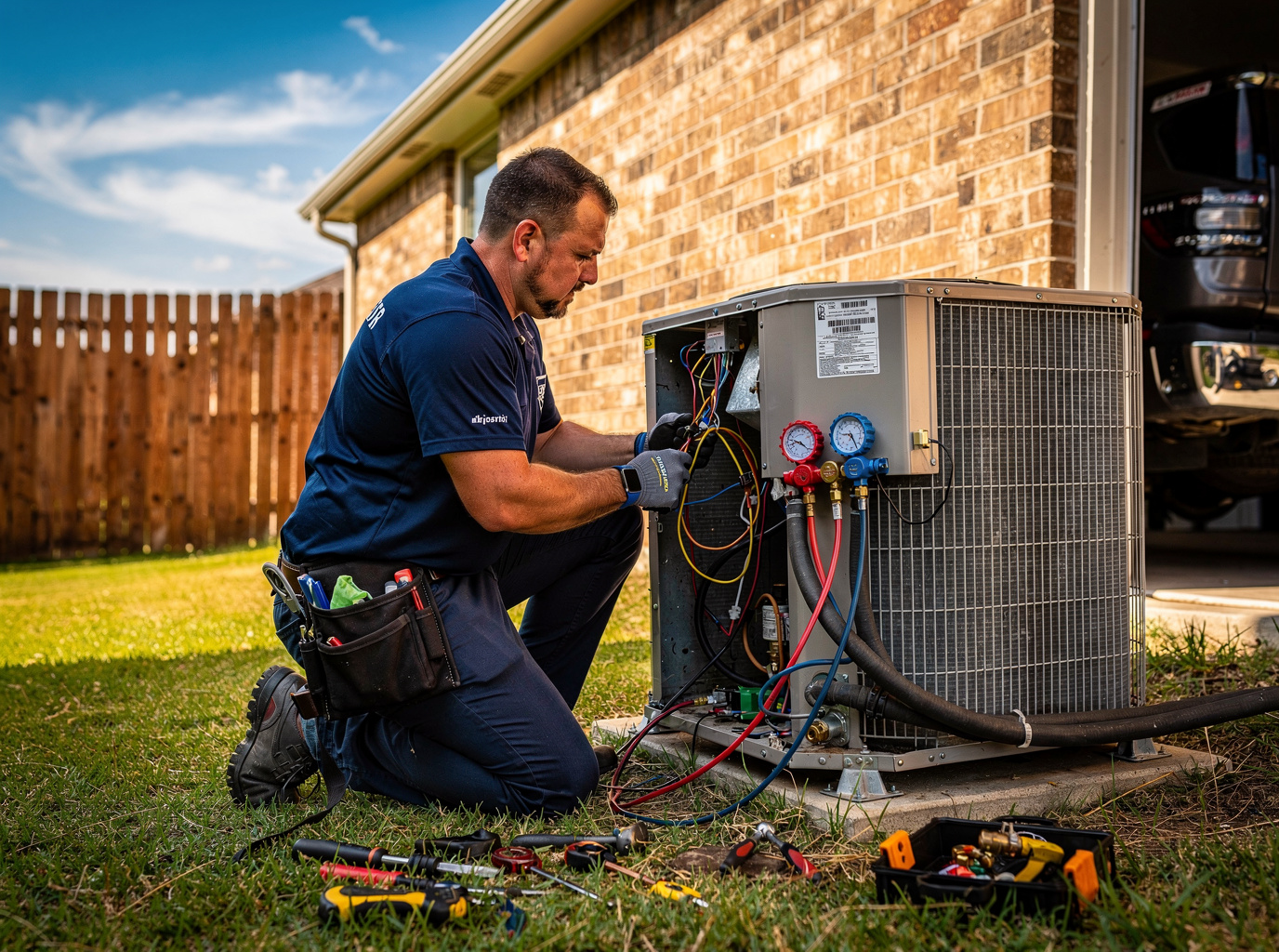
Air Conditioning Repair
AC repair is the diagnosis-led restoration of a failed or failing cooling system. A technician finds the fault, proves it, repairs or replaces the failed component, and then verifies that the whole system works as one unit before the job is closed. The aim is a cooling system that runs safely and holds the indoor temperature. Swapping a part to make a symptom disappear is not the aim. In practice, restoration means more than the failed part. The technician also confirms that the system around that part can carry the repair: related strain points are checked, airflow and controls are read, and the whole system is verified before the job closes. Repair differs from maintenance, which is scheduled care that keeps a working system working and looks for wear before it fails. Repair also differs from replacement, which installs a new system and is a separate decision. A repair that fixes one part but leaves a strain point untested has not restored the system. The discipline this page teaches is simple: a symptom is not a diagnosis. Warm air from the vents, a unit that will not start, ice on the refrigerant line, a loud rattle at the outdoor unit, or a system that switches on and off every few minutes can each come from several different causes. Those causes fall into four groups: controls and electrical, airflow, the refrigeration circuit, and condensate drainage. Until the cause is proven, any repair is a guess. Dallas makes this discipline matter. NOAA's 1991–2020 climate normals for Dallas Love Field place July and August mean daily highs near 97°F. In that kind of heat, a failed cooling system is not a minor inconvenience. For older adults, young children and anyone with a medical condition, indoor heat can become a safety problem. That is why a failed system here deserves a prompt, methodical response. Call American HVAC Pros to describe what the system is doing. A clear account of the symptoms, when they started, and what changed in the house beforehand is the most useful thing a homeowner can bring to the first conversation. This page covers repair intent only: faults in an existing air conditioner, the diagnosis that finds them, and the repair that follows. Decisions about a new system belong on the installation page. Furnace-specific repair depth is covered at the furnace services page. Scheduled care for a working system is covered at the maintenance page.
Learn more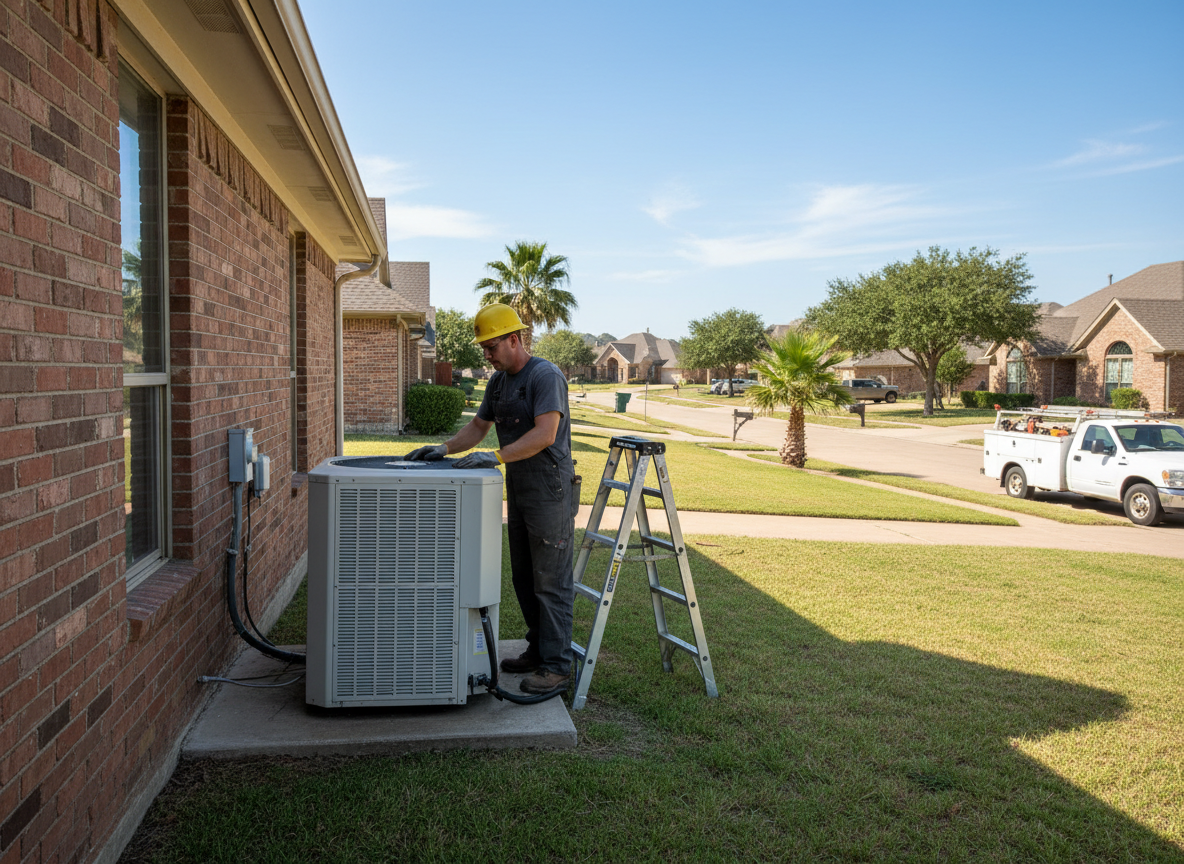
Air Conditioning Installation
AC installation is the selection, sizing and installation of a new cooling system, whether it replaces an aging unit or cools a home for the first time. It is a decision measured in decades of running, not a product purchase. The equipment on the pad or in the attic is only part of what the homeowner lives with for years. The system is judged by how well it holds the house at a steady temperature on the hottest August afternoon and on a mild spring evening, and that depends on the work around the equipment. The core discipline of this page is that the equipment matters less than the sizing, the condition of the ducts and the quality of the installation around it. A well-built system with the wrong capacity will run badly. A correctly sized system pushing air through leaky, undersized ductwork will still underdeliver. A correct installation of a sound system, with ducts that can carry the air, is what gives the homeowner even cooling, quiet operation and predictable running costs. Each of those outcomes depends on measuring before anything is ordered. Dallas makes this discipline matter more. NOAA's 1991 to 2020 climate normals for Dallas Love Field show mean daily high temperatures near 97°F in July and August, so the cooling season is long and severe. Sizing errors here punish twice. An oversized system short-cycles in the shoulder months of spring and fall, running in brief bursts and never removing enough humidity. An undersized system falls behind in August, when the house can least afford it. The same mistake that leaves a house clammy in May leaves it hot in August. Replacement and first installation follow the same logic. Whether a house has never had cooling or has a system that no longer keeps up, the questions are identical: how much cooling the home needs, what the ducts can deliver, what the electrical supply can support and how the new equipment will be proven before handover. Replacement is often the lead case where a home already has ductwork and electrical service, and those must be checked rather than assumed. The duct condition found at assessment can change which option is realistic. Call American HVAC Pros early to describe the home, the rooms that never cool evenly and the system you have now. That conversation shapes the assessment that follows. The business operates from one Dallas address, 2249 Vagas St, Dallas, TX 75219.
Learn more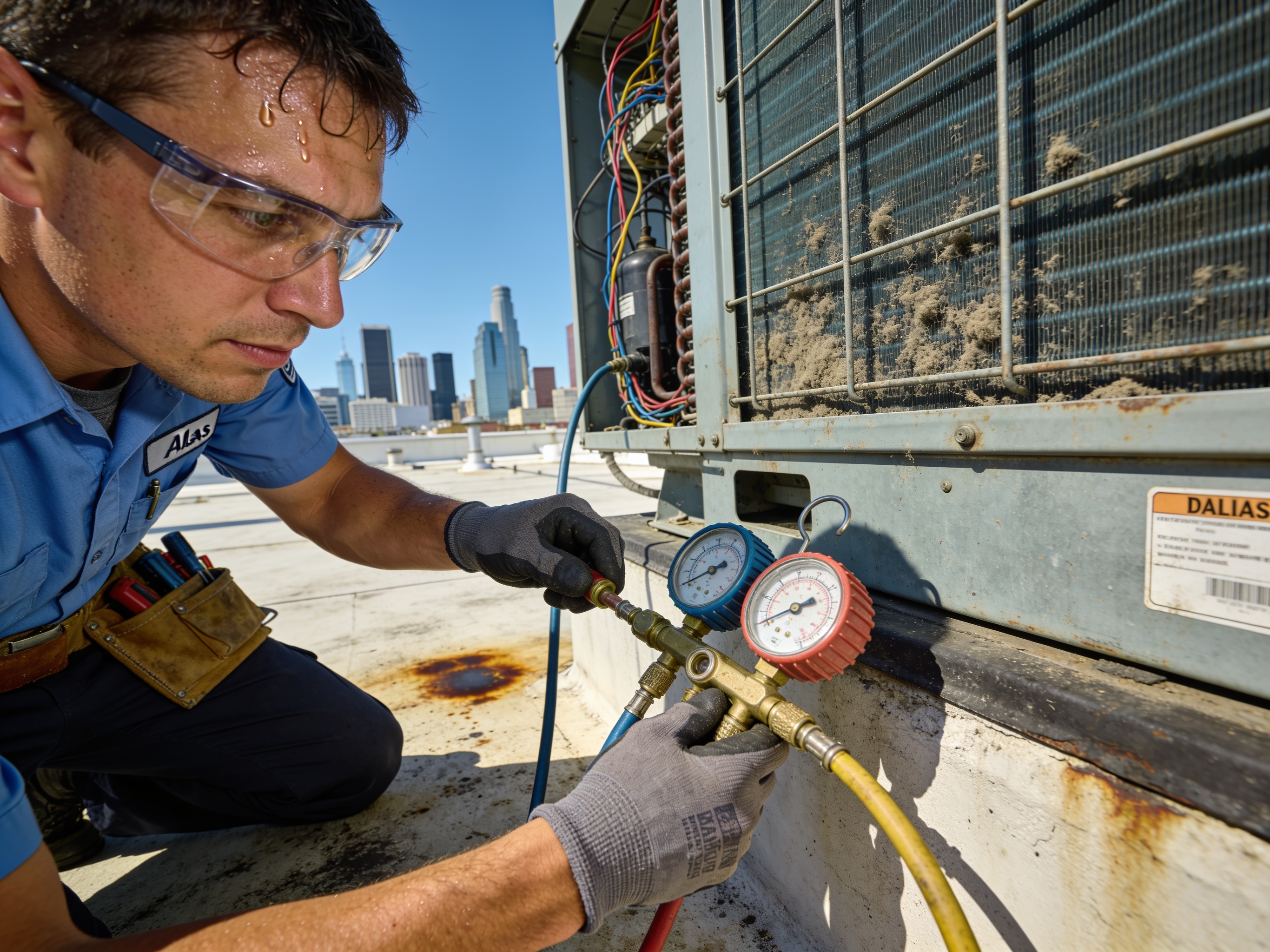
Air Conditioning Maintenance
AC maintenance is the scheduled inspection, cleaning, testing and measurement of a working cooling system. Its purpose is to find drift and wear while they are still small, so wear is found while it is still small and can be dealt with on a calm day. Maintenance does not make an air conditioner immortal. No visit stops parts from ageing. What a good tune-up does is show the owner what is changing: a capacitor starting to weaken under load, a condensate drain slowing down, an outdoor coil collecting dirt, or a refrigerant reading that has moved away from its expected values. Each of these is cheaper and less disruptive to deal with while the system still runs. A maintenance visit measures, cleans, tests and records. Measuring means reading pressures, temperatures and electrical values and checking how the thermostat behaves. Cleaning means clearing the coils and the condensate line. Testing means checking the capacitor and contactor under load and confirming that the float switch trips. Recording means writing every result down. A visit is not a repair. If the technician finds a fault, that fault becomes a separate diagnosed job, quoted on its own. Parts drift out of specification gradually, long before they stop working. A capacitor's measured value slips away from its rating, a contactor's surfaces begin to pit, a condenser coil fouls a little more each season, and a drain line narrows as growth builds up. The visit exists to catch that drift while it is still small. The written record from each visit is what the next visit compares against, so a change over several seasons shows up as a measured difference rather than a surprise. Dallas makes the case. NOAA 1991–2020 climate normals for Dallas Love Field show a long cooling season, with the hottest weather arriving in July and August. Across that season a Dallas system runs for many hours, and every hour of run time adds heat, dust and mechanical load to the same small set of parts. Runtime is the argument for the visit. This page explains what the visit checks, when to book it, how the work runs, what the written record is for, and what the cost depends on. If your system has already stopped cooling, the job is different, and a failed system belongs on our air conditioning repair page. To book a tune-up, call American HVAC Pros to arrange the inspection.
Learn more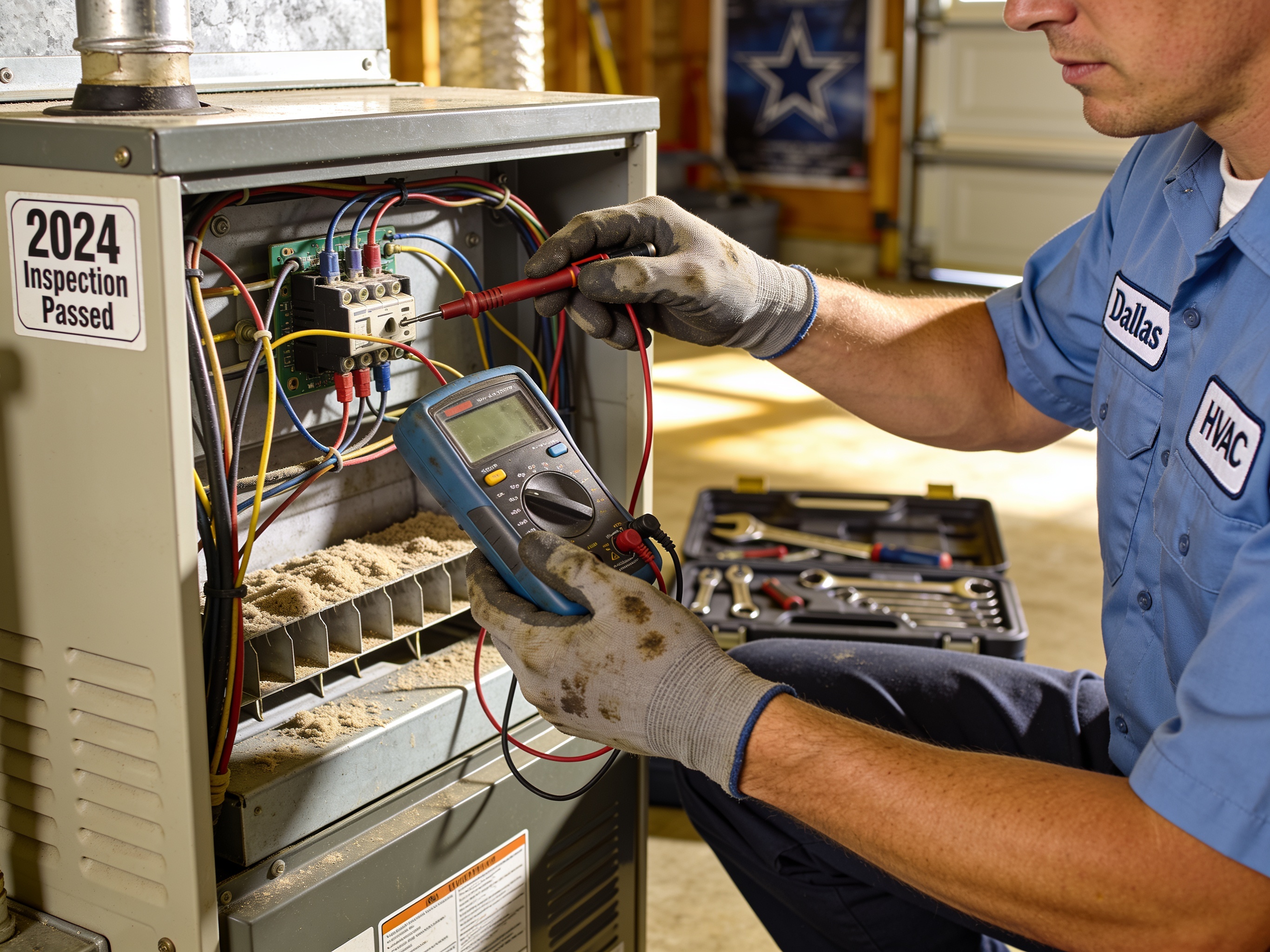
Heating Repair
Heating repair restores a heating system that has failed or is failing. The work starts with diagnosis: find the fault, prove it, repair it, then verify the system runs safely through a full heating cycle. American HVAC Pros works on gas and electric furnaces, heat pumps running in heating mode, and electric heat, from our Dallas base at 2249 Vagas St, Dallas, TX 75219.
Learn more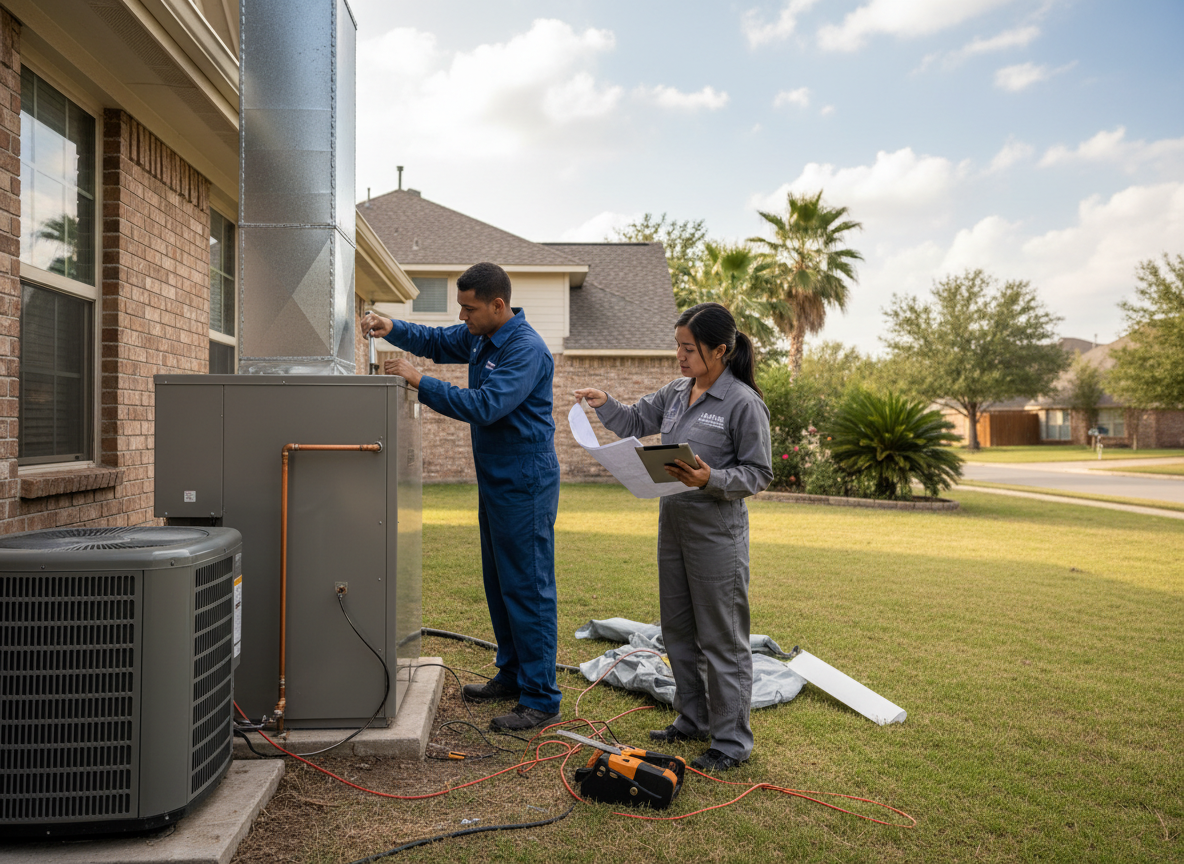
Heating Installation
Heating installation is the selection, sizing and installation of a new heating system for a home. The system may be a gas furnace, a heat pump, or a hybrid that pairs the two. Each choice is matched to the home's actual heat load, meaning the heat the building loses on the coldest days it is likely to see. The decision should not rest on how cold the household remembers last winter being. A calculated heat load is a room-by-room estimate of the heat the building must replace on a design-cold day, based on its size, insulation, window area and air leakage. Floor area alone does not set the load, because insulation, glazing and air leakage can move the figure in either direction. That figure governs the choice, because equipment sized from it can match the home, while equipment sized from the old unit or from memory cannot. Three routes are available. A gas furnace produces heat by burning fuel. A heat pump moves heat from outdoor air. A hybrid pairs a heat pump with a furnace for the deepest cold. This page covers new heating equipment and the work around it. Cooling-system installation is covered on Air Conditioning Installation. Heating breakdowns and furnace-specific repair are covered separately, and the page on Furnace Services owns the furnace lifecycle. Heat-pump ownership questions are covered on Heat Pump Services, so this page stays on the heating decision. In North Texas, cooling leads the climate and heating plays a supporting role. NOAA 1991–2020 normals for Dallas Love Field show a long, hot cooling season, with July and August mean daily maximums near 97°F. Winter is usually mild, but it is not always mild. The January mean minimum is 22.5°F, and hard freezes are a normal feature of the season. That pattern is what makes heating easy to undersize or neglect, until a freeze week reprices the decision all at once. Because cooling sets the rhythm of the year, a heating system sized only for a typical week may struggle in the one week that matters most. The discipline for this page is simple: size the system for the cold the normals record, not for the mild winter a homeowner remembers. American HVAC Pros operates from one Dallas location at 2249 Vagas St, Dallas, TX 75219, and serves homeowners with the same assessment-first approach. Call American HVAC Pros to talk through how the home is heated today before any equipment is chosen.
Learn more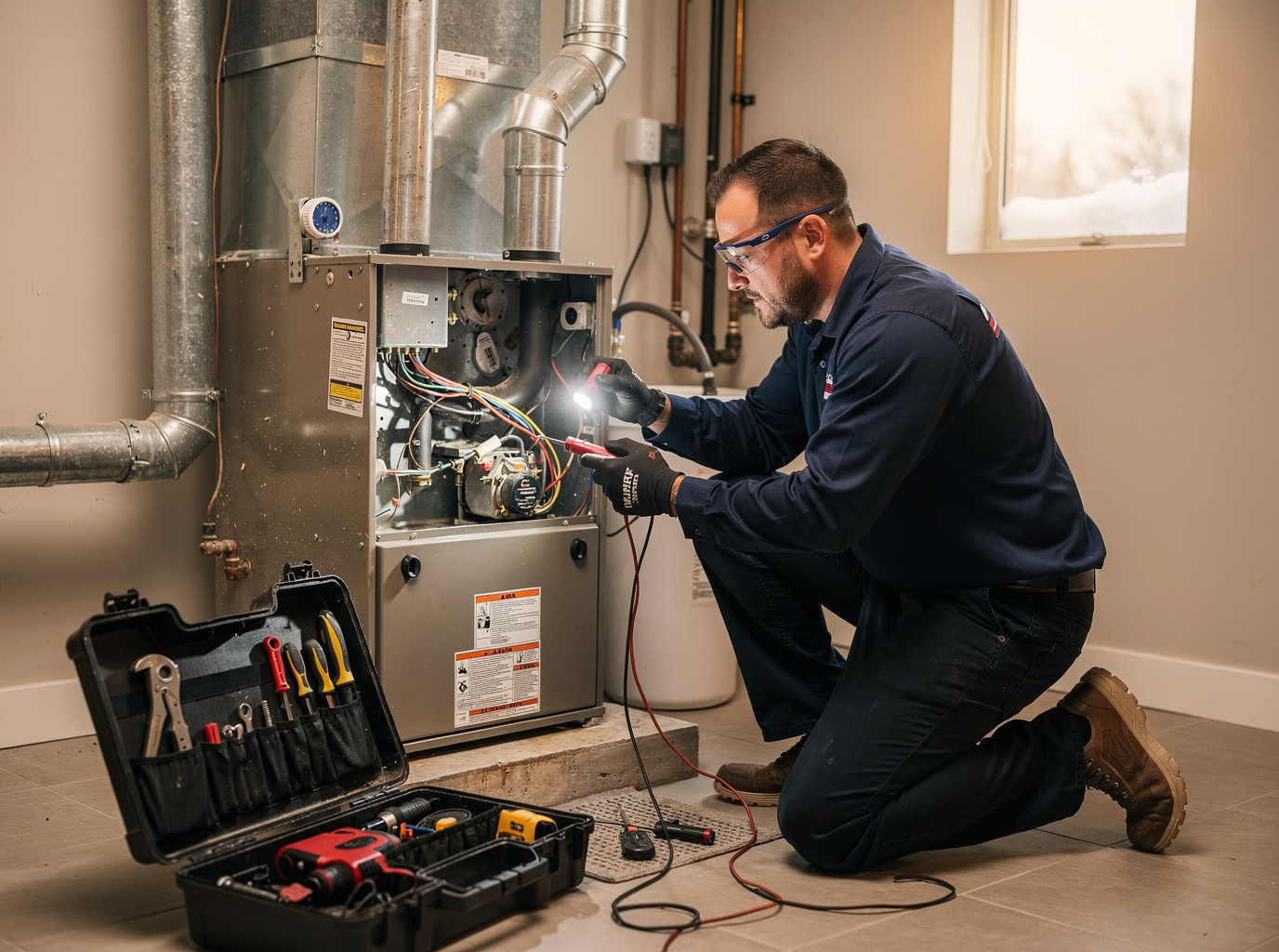
Furnace Services
Furnace services cover scheduled maintenance, repair when a furnace stops working, and a candid judgement on whether it should be repaired or replaced for a gas or electric furnace. American HVAC Pros treats these as one lifecycle, because each visit leaves a record that shapes the next decision.
Learn more
Heat Pump Services
Heat pump services cover the care, repair and replacement judgement for a heat pump, a system that moves heat rather than making it. In summer it pulls heat out of the house. In winter it reverses that job and pulls heat in from the outside air. Outdoors, the heat is released the way an air conditioner releases it, and one outdoor unit and one refrigerant circuit do both jobs. Call American HVAC Pros at 2249 Vagas St, Dallas, TX 75219 to describe what the system is doing before you decide anything else. A clear description of the symptoms often narrows the problem faster than guessing at parts. Many homeowners know the furnace-and-air-conditioner pairing well. A heat pump changes that arrangement. The separate air conditioner and furnace are replaced by one outdoor unit and one refrigerant circuit, and the heating depends on the same outdoor coil that cools in summer. That shared circuit is why a heat pump has to be checked in both modes. Choosing between the two is covered on heating installation, and heating-only faults in a furnace home go to heating repair. The reversing valve makes the switch possible. It changes the direction refrigerant flows through the two coils. In cooling, the indoor coil absorbs heat and the outdoor coil releases it. In heating, the roles swap: the outdoor coil absorbs heat from outside air, even in cold weather, and the indoor coil releases that heat into the home. In heating mode the outdoor coil can collect frost when it runs cold. The system then runs a defrost cycle, briefly reversing to clear the frost. A short defrost is normal and can make the air from the vents feel cool for a few minutes. Because a heat pump's heat output falls as outdoor air gets colder, most systems include auxiliary heat. This is usually electric resistance heating strips, or a furnace paired with the indoor air handler. Auxiliary heat supports defrost and covers the coldest snaps. Dallas asks a lot of both modes. NOAA's 1991 to 2020 normals for Dallas Love Field show July and August mean daily maximum temperatures near 97°F, a long and severe cooling season. The same normals show a January mean daily minimum of 37.9°F, and a January mean minimum of 22.5°F, which means hard freezes are a normal part of winter. Read together, that is the climate band where a heat pump carries most of the year's load and auxiliary heat covers the snaps. This is climate reasoning from the normals, not a prediction of how any particular house will perform. This page covers heat pump systems only. A cooling failure on a conventional air conditioner with no heat pump is a different service, and a heating breakdown on a furnace has its own page.
Learn more
Ductless Mini-Split Systems
A ductless mini-split system heats and cools a home without any ductwork. It has one outdoor unit, connected by refrigerant lines to one or more indoor units mounted on a wall or ceiling. Each indoor unit serves its own zone and is controlled independently. In plain terms, the system works as a set of linked rooms. One outdoor unit provides the heating and cooling, and refrigerant lines carry that energy to each indoor head instead of a duct network. Each head serves one zone, so the number of heads follows the number of rooms that need their own control. Against the ducted routes, ductless is the option that skips the duct network altogether: a ducted system conditions the whole house through one shared set of runs, while a ductless system conditions chosen rooms directly. It answers the housing situations where ducts are missing, impractical or unevenly delivering air, including home additions, garage conversions, and single problem rooms that a ducted system never serves well. The indoor head contains the coil and the blower. The outdoor unit holds the compressor and condenser. Refrigerant lines carry the heating or cooling energy between the two, along with a condensate drain. Because the air is conditioned in the room itself, no duct network sits anywhere in the path. That difference shapes how the system performs. A ducted system moves conditioned air through supply and return runs, so leaks, undersized runs and crushed ducts all cost capacity. A ductless system has no such network to lose air through. Its performance depends on the outdoor unit, the line set and where each indoor head sits. Each zone runs on its own schedule. One head can cool a bedroom overnight while another serves a living room during the day. Rooms that a ducted system never reaches evenly are a common reason homeowners look at this type of system. Dallas homes show the situations where ductless work most often makes sense. The housing mix runs from large family suburbs to apartment-dominated towns in the metro area, and across that range the same situations recur: a room added to a house with no duct run to it, a garage converted into living space, a detached studio or outbuilding, a house built without ducts, and one stubborn room the existing system has never served well. If you are unsure whether a ductless system suits your home, call American HVAC Pros to describe the rooms and the system you have now. That conversation is where the decision starts.
Learn more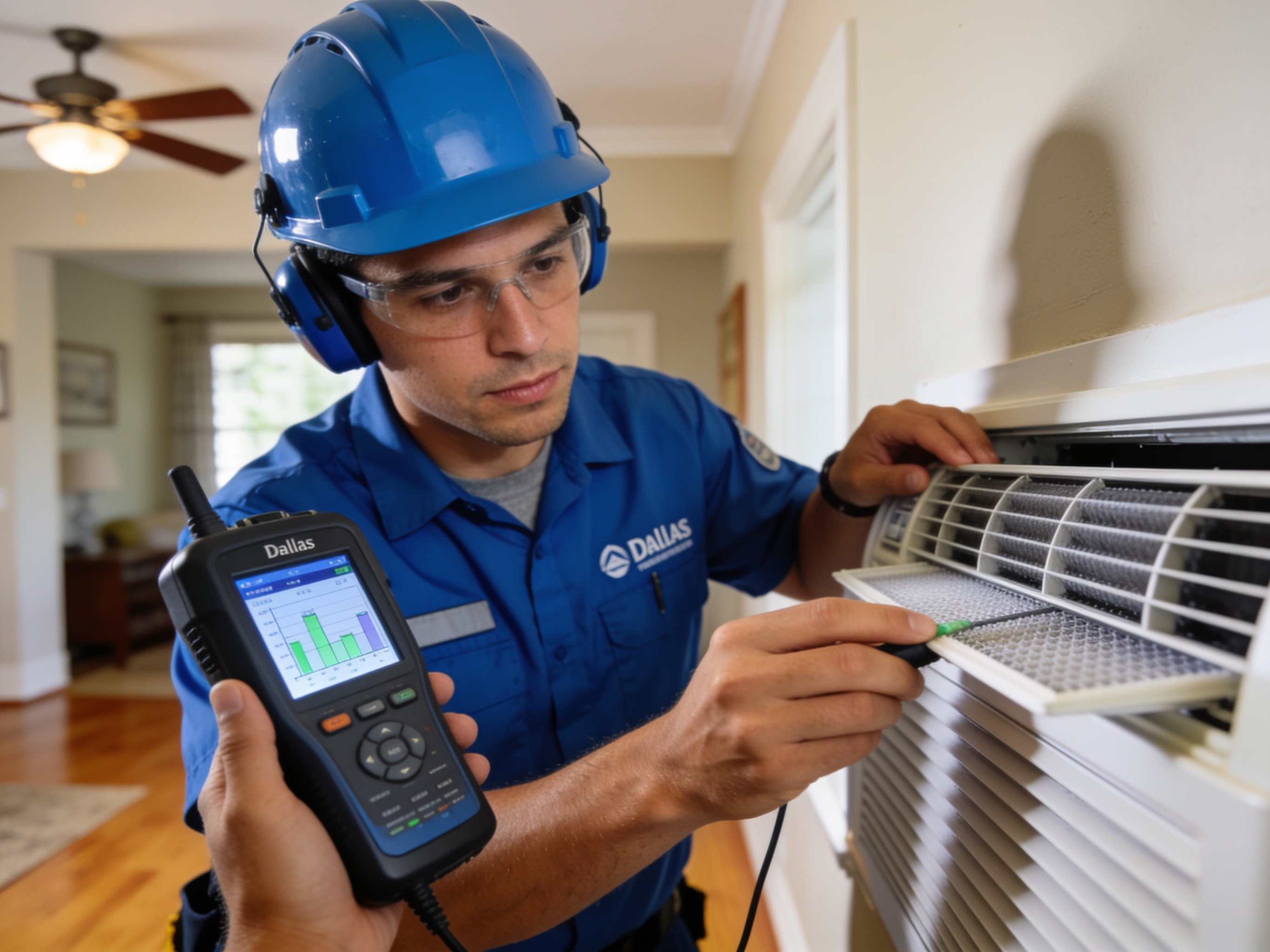
Indoor Air Quality Services
Indoor air quality services are the assessment and improvement of the air inside a home through its HVAC system. The work looks at what the air carries, mainly fine particles, moisture, and stale air that has not been exchanged with outside air for a long time. It then changes those conditions with three levers: filtration, humidity control, and ventilation with fresh-air balance. Each lever changes something different, so the service begins by finding out which lever the home actually needs. Honesty comes first on this page. IAQ work changes the air and the comfort of a home by mechanism. A filter captures particles of a given class. Humidity control changes how the air feels and how wood, paint, and furnishings behave over a season. A fresh-air intake changes how much stale air leaves the house. None of this is medicine. This page does not describe IAQ equipment as a treatment for any condition in people, and it will not sell it that way. The three levers work on different parts of the same problem. Filtration removes particles from the air that passes through the system, humidity control holds moisture in a workable range, and ventilation swaps stale indoor air for outside air at a controlled rate. The assessment comes before any of them. This page is not about duct cleaning, which concerns the ducts themselves, and it is not a product sale. Dallas makes the problem easy to see. The NOAA 1991 to 2020 climate normals for Dallas Love Field describe a long cooling season, with hot afternoons lasting for months at a stretch. Through that period, homes stay closed up and the air conditioner runs for long hours, so the same air is filtered, cooled, and pushed around the house again and again. That recirculation is the problem statement for this service. Air that is not filtered to suit the home, not balanced for moisture, and not exchanged with outside air slowly becomes dusty, stuffy, or damp in ways a homeowner notices. American HVAC Pros treats indoor air quality as an HVAC discipline, not a product catalogue. The work is done on the equipment and ductwork you already have, and every change is checked against what the system can carry. If the air at home is a concern, describing what you notice is the right starting point. Call American HVAC Pros to describe what the system is doing, and the assessment begins from those observations. The business is based at 2249 Vagas St, Dallas, TX 75219.
Learn more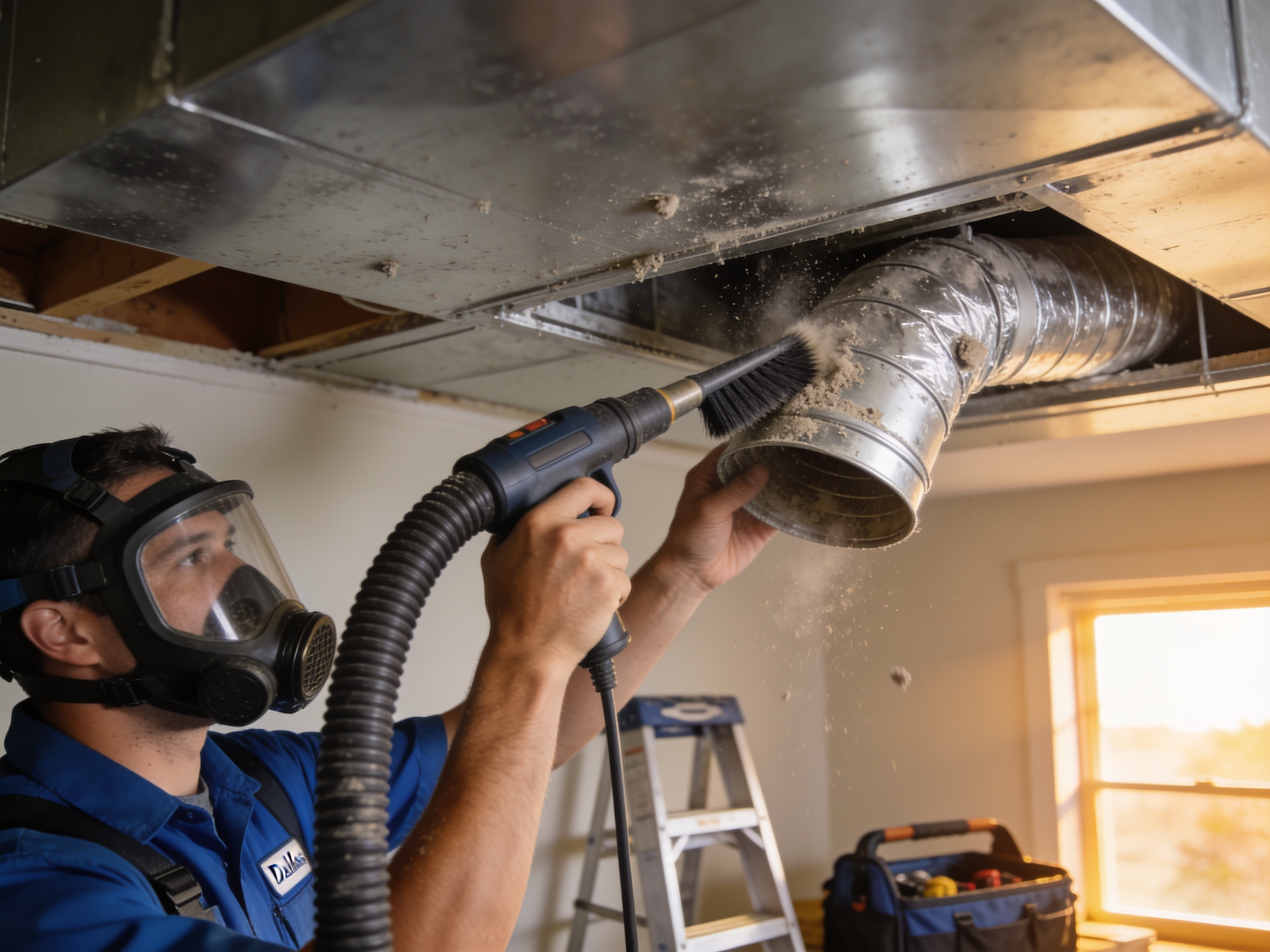
Air Duct Cleaning
Air duct cleaning is the mechanical removal of dust, debris and construction residue that has collected inside a home's ductwork. The job reaches the supply runs that carry conditioned air to each room, the return runs that draw air back to the system, the registers at every opening, and the accessible surfaces of the air handler. Technicians treat the whole system as one job, not as a set of separate add-ons. Two methods do the work. Agitation uses brushes or air whips to loosen debris that has stuck to the duct walls. Negative-pressure extraction places the system under vacuum so that loosened material is pulled out through the equipment rather than drifting into the rooms. The two methods depend on each other. Agitation without extraction would move debris from the walls into the house, and extraction without agitation would leave the bonded material behind. Debris collects in ductwork for ordinary reasons. Air moves through the system every time the blower runs, and dust from the room air or from construction work can drift into the duct openings and settle on interior surfaces. Over time that layer can build up in areas where material has settled and never been moved. Cleaning exists to remove that layer. It does not change how the system performs in other ways. Cleaning removes accumulated dust and debris from inside the ductwork. That is the full claim. Duct cleaning is not a health treatment, and this page makes no health claims for it. It is not a repair. It does not seal leaks, reconnect a loose run or replace a crushed section of flex duct, although damage of that kind is reported honestly when it is found. It is also not a substitute for filtration, humidity control or ventilation. Those are air treatment decisions, covered on our Indoor Air Quality Services page. Homeowners across the US can use this page to understand the work, while American HVAC Pros operates from one physical address in Dallas. If you are unsure whether your ducts need attention, you do not have to decide on a schedule. The inspection is the step that decides whether cleaning is warranted at all, so no work is assumed in advance. Call American HVAC Pros to describe what you are seeing in the registers or what you know about the home's duct history, and talk through what an inspection can establish before any cleaning is discussed.
Learn more